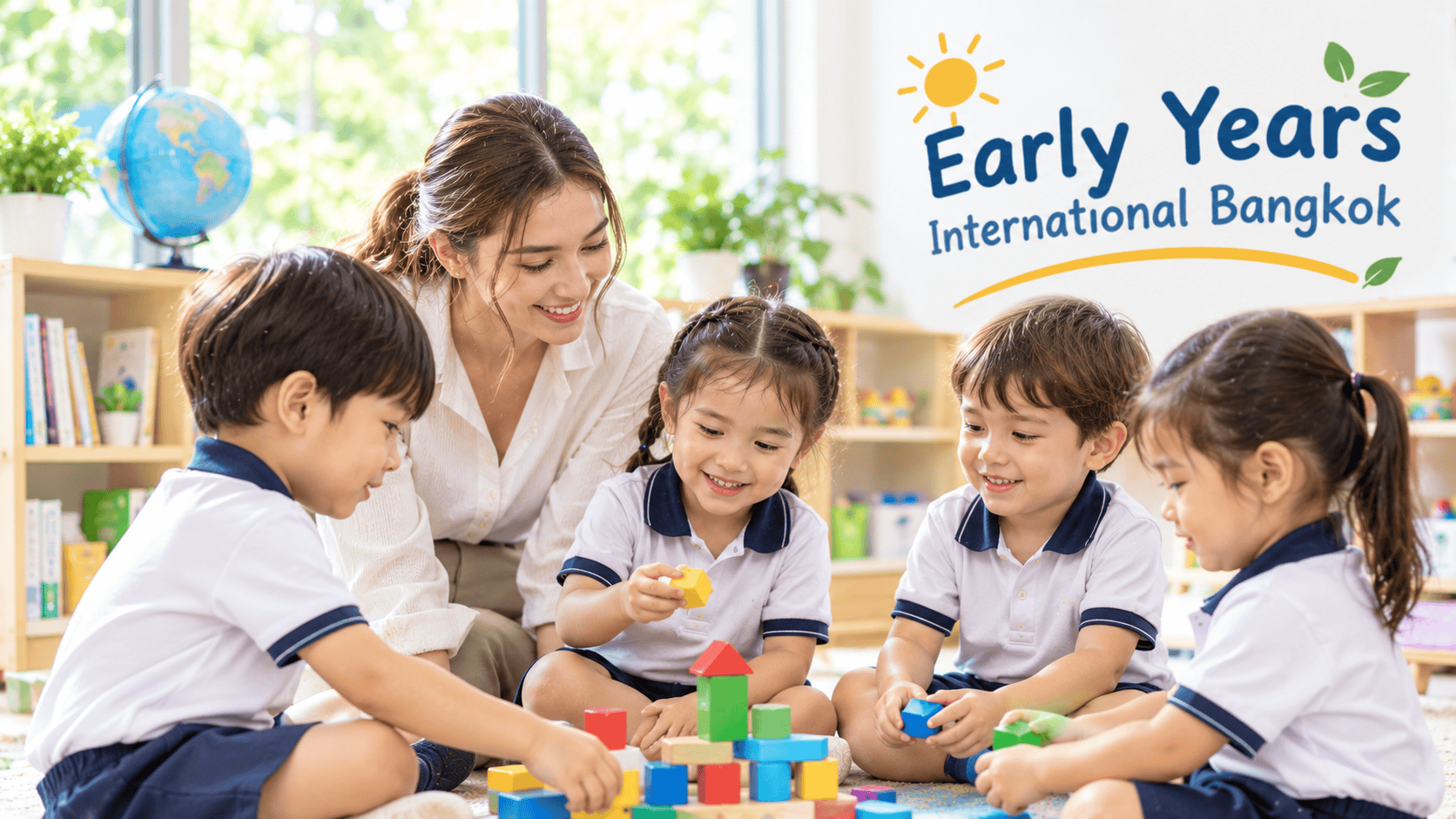
Choosing the right nursery involves many considerations, from teaching methods and facilities to daily routines and emotional support. One factor that deserves particular attention is how teachers interact with children in their learning groups.
For families researching Early Years International Bangkok, smaller learning groups may offer important advantages during a child’s first educational experiences. Young children benefit from encouragement, familiar relationships and opportunities to receive personalised guidance as they explore new environments.
However, class size alone does not determine educational quality. The qualifications of teachers, the overall classroom atmosphere and the school’s approach to child development are equally important.
Understanding Class Size in Early Childhood Education
Class size refers to the number of children assigned to a learning group, while the adult-to-child ratio describes how many qualified staff members are available to supervise and support them.
These measurements are related but represent different aspects of the learning environment.
For example, a classroom with several teaching assistants may provide more opportunities for individual supervision than a similarly sized group with fewer adults.
Parents should therefore consider class size and staffing arrangements together.
Why Individual Attention Matters
Every child enters nursery with different experiences, interests and developmental needs.
Some children are confident communicators, while others may need additional encouragement to express themselves. Some enjoy group activities immediately, while others require time to become comfortable.
When teachers have opportunities to observe individual children closely, they can adjust activities, provide reassurance and recognise emerging interests.
Personalised attention should not mean constant adult intervention. Children also need independence and opportunities to solve problems themselves.
How Smaller Learning Groups May Support Communication
Language development involves much more than memorising vocabulary.
Children learn by listening, responding, asking questions and participating in meaningful conversations.
In smaller groups, teachers may have more opportunities to speak directly with each child and encourage participation.
Storytelling, songs, role-playing and guided discussions help children practise communication naturally.
Supporting Children Who Are Learning English
Children entering an international nursery may come from households where English is not the primary language.
A supportive classroom can introduce English through repetition, visual materials, familiar routines and daily interaction.
Teachers should recognise that language acquisition takes time and that children develop confidence at different speeds.
Parents can ask schools how teachers communicate with children who are still developing English comprehension.
Building Confidence Through Positive Relationships
A child’s first experience of school often involves learning to trust unfamiliar adults and interact with new classmates.
Consistent relationships help children feel secure enough to participate in activities.
When teachers understand individual personalities, they can recognise when a child needs encouragement or reassurance.
Supporting Social and Emotional Development
Early social experiences introduce children to sharing, cooperation and emotional expression.
Small-group activities can create manageable opportunities for children to practise these skills.
Teachers can support children during disagreements, demonstrate respectful communication and help them recognise emotions.
These experiences contribute to emotional wellbeing and help children develop positive relationships.
Personalised Learning in the British EYFS Curriculum
The British Early Years Foundation Stage recognises that young children develop at different rates.
An effective EYFS learning environment offers age-appropriate experiences while allowing teachers to observe individual progress.
Learning activities may involve early literacy, mathematics, movement, creative expression and understanding the world.
Personalised teaching enables educators to provide additional support or introduce new challenges according to a child’s needs.
Observation-Based Learning
Observation is an important part of early childhood education.
Teachers can learn about a child’s interests, communication style and developing skills by observing everyday activities.
For example, a child interested in constructing towers may be encouraged to explore shapes, balance and counting.
Another child who enjoys storytelling may benefit from activities involving picture sequencing and imaginative language.
This approach helps teachers build on existing interests rather than expecting every child to complete identical tasks at the same pace.
Comparing International Nursery Learning Environments
Families searching for an international nursery in Bangkok may encounter schools with different classroom structures.
Some use larger mixed-activity spaces, while others organise learning into smaller groups or dedicated activity areas.
Neither arrangement should be judged solely by appearance.
Parents should investigate how adults supervise children, how activities are organised and whether teachers have sufficient opportunities to understand individual needs.
Questions to Ask About Classroom Organisation
During a school visit, useful questions include:
- How many children typically participate in each learning group?
- How many qualified educators are present during daily activities?
- How do teachers identify individual learning needs?
- How are children supported when they struggle with separation anxiety?
- How does the school communicate development and progress to parents?
The answers can reveal more about everyday educational experiences than class-size figures alone.
Why Learning Facilities Still Matter
Smaller groups are most effective when supported by an appropriate environment.
Young children require space to move, investigate and interact safely.
Purpose-built classrooms, accessible materials and outdoor play areas can support independent exploration.
Different activity spaces may also help children develop concentration, coordination and creativity.
Teachers need flexibility to organise quiet activities, energetic play and small-group discussions according to the children’s needs.
Exploring Early Years at Brighton College Bangkok Vibhavadi
Brighton College Bangkok Vibhavadi offers a British EYFS programme for young children across Pre-Nursery, Nursery and Reception.
The school highlights small-group learning experiences, personalised guidance and a caring teaching environment as important elements of its Early Years approach.
Children participate in activities involving communication, early mathematics, creative arts, music and physical development, alongside opportunities for outdoor exploration.
Parents considering Early Years International Bangkok can review the programme to better understand how individual attention and purposeful play contribute to the nursery experience.
A school tour also allows families to observe teacher-child interactions rather than relying entirely on descriptions.
How to Evaluate Individual Attention During a School Visit
Observing an active classroom can provide useful insights into how teachers support children.
Notice whether educators speak warmly to pupils, listen carefully and encourage participation.
Consider whether children can choose suitable activities and whether teachers provide assistance without unnecessarily directing every action.
It is also worth observing how staff respond when a child becomes upset or needs additional support.
Look Beyond the Numbers
A small class is not automatically the best environment for every child.
High-quality teaching, safeguarding, professional development, inclusive practices and strong communication with parents remain essential.
Parents should also consider the school’s curriculum, daily routine and approach to preparing children for the next educational stage.
The goal is to find an environment where their child can feel safe, engaged and supported.
Frequently Asked Questions
Are small classes better for nursery children?
Smaller learning groups can create opportunities for individual attention and interaction, but educational quality also depends on teachers, staffing and classroom organisation.
How does individual attention support language development?
It allows teachers to encourage conversations, respond to questions and adjust language activities to suit each child’s level of understanding.
Is class size more important than the curriculum?
Both matter. A strong curriculum provides educational direction, while effective classroom organisation supports meaningful implementation.
What should parents observe during a nursery tour?
Look at teacher-child relationships, supervision, learning activities, emotional support, facilities and how comfortably children participate.
Conclusion
Early childhood education is most effective when children feel recognised, supported and encouraged to explore.
Smaller learning groups can create valuable opportunities for personalised teaching, positive relationships and meaningful communication.
When choosing an international nursery in Bangkok, parents should evaluate class size alongside teacher qualifications, educational philosophy, facilities and daily learning experiences.
A thoughtful decision considers the complete environment and how well it supports each child’s development.